Sigaway
Visit site →Sigaway — Fleet Management Platform
Fleet management · Logistics SaaS
- Sector
- Logistics SaaS
- Role
- Product Designer (UX/UI)
- Duration
- 2023 - 2024
- Users
- Fleet managers, dispatchers & drivers
Sigaway is a fleet management platform that helps logistics teams monitor vehicles, drivers, and daily operations. Joining an existing product, I was responsible for redesigning key areas of the platform while evolving the experience across desktop and responsive mobile. Working closely with the Product Owner, Product Manager, engineers, and business stakeholders, I helped translate operational needs into scalable product decisions.
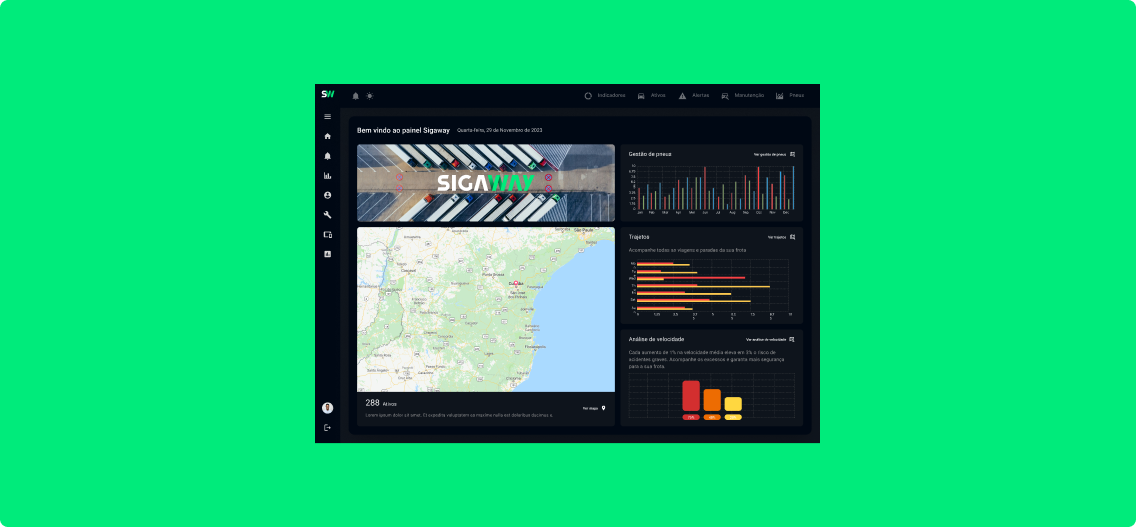
Sigaway web dashboard — indicators, trajectories and speed analysis on a single screen.
01
Designing for the office and the road.
Sigaway had already been in the market for a year. As the product evolved, new features had been introduced to support growing operational demands, but the experience had gradually become inconsistent across different workflows.
Joining an existing product meant understanding what already worked before proposing changes.
As the sole Designer, I collaborated closely with the Product Owner, Product Manager, engineering team, and business stakeholders to redesign core areas of the platform while expanding new capabilities. One of the main initiatives was designing the Tire Management module, alongside improving the responsive experience for professionals working both in the office and in the field.
Rather than treating desktop and mobile as separate experiences, every decision aimed to create a product that felt consistent regardless of where it was being used.
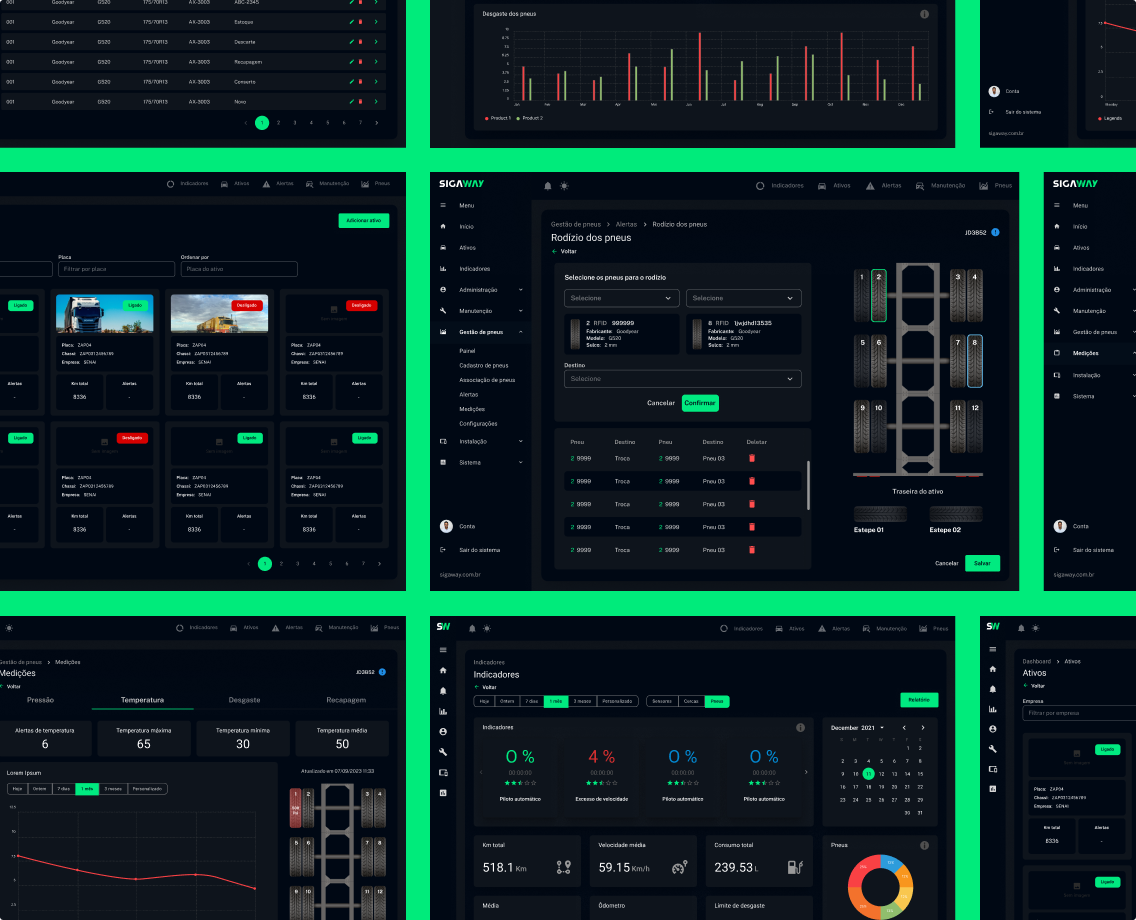
A cut across the redesigned web product — asset management, tire operations and indicator dashboards.
02
Understanding operations before designing solutions.
Every feature started with conversations.
I worked alongside the Product Owner and stakeholders to understand operational challenges, validate business needs, and identify opportunities through user research and product discovery.
Those insights shaped decisions across the platform, from reorganizing dashboard hierarchy to improving workflows related to fleet monitoring, route history, alerts, and tire management.
One example was the Tire Rotation experience. Instead of presenting maintenance information as tables alone, I designed a visual chassis representation that allowed managers to quickly understand each tire's position and rotation history, making operational decisions easier during maintenance planning.
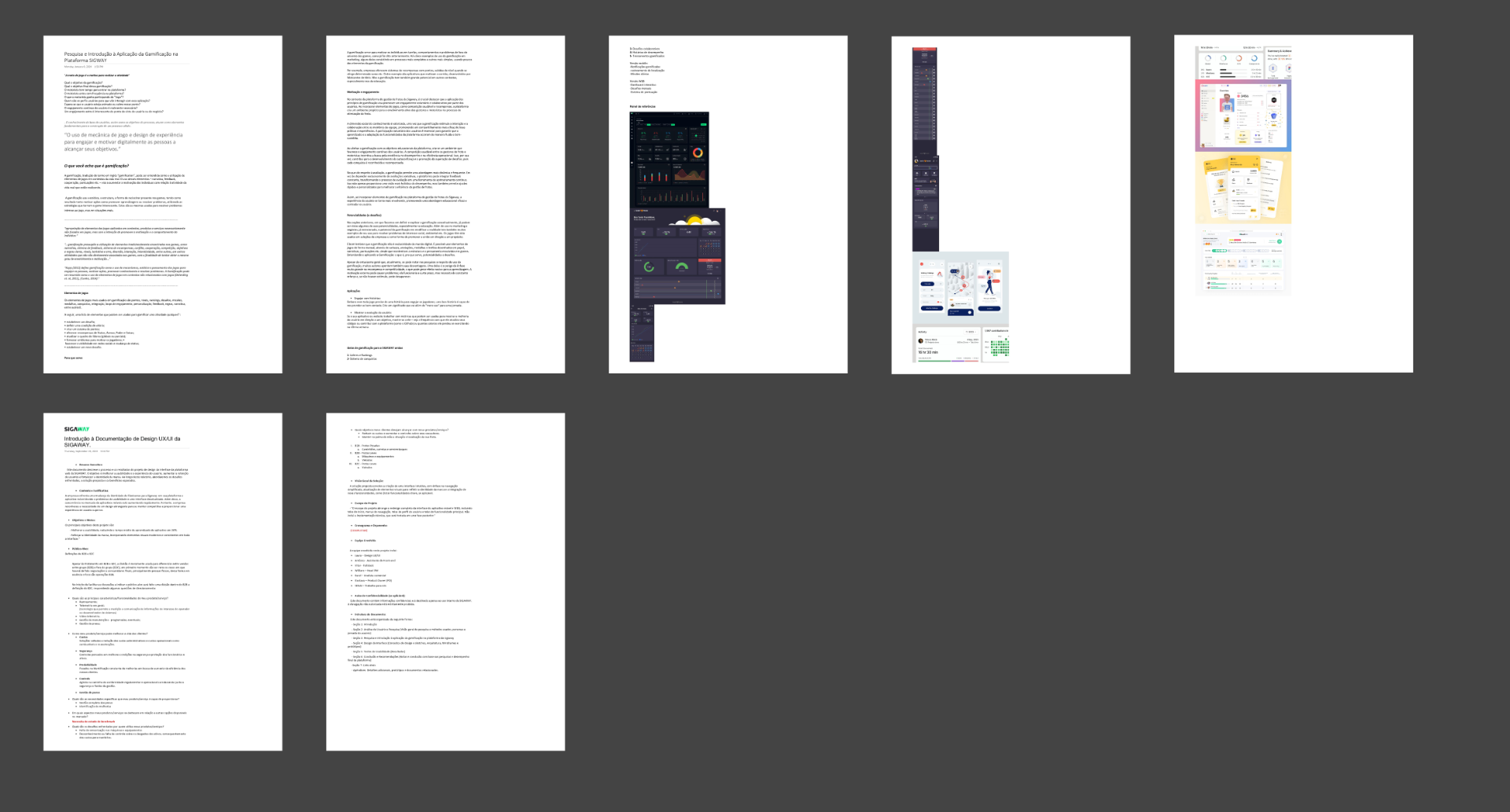
EARLY DISCOVERY ARTIFACTS. RESEARCH NOTES, WORKFLOW MAPS, AND DOCUMENTATION USED TO UNDERSTAND FLEET OPERATIONS AND INFORM PRODUCT DECISIONS.
03
Documentation that keeps the team aligned.
Documentation became one of the main tools for collaboration throughout the project.
Each initiative was supported by user flows, functional requirements, interaction specifications, wireframes, and research findings that helped product, engineering, and stakeholders align around the same decisions.
As the platform continued evolving, we held frequent review sessions with leadership to present progress, discuss proposed changes, and explain the reasoning behind key design decisions. Preparing these presentations required translating research findings, business goals, and technical constraints into clear narratives that supported product direction.
Rather than serving only as handoff material, documentation became part of the decision-making process.
04
Building consistency with Material UI
Instead of introducing a completely new design system, I built on the Material UI foundation already adopted by the engineering team.
Working within those technical constraints, I customized components, interaction patterns, and visual behaviors to better reflect Sigaway's product needs while preserving consistency with the existing codebase.
This approach allowed design and engineering to move faster together, reducing unnecessary rework while creating a more cohesive experience across the platform.
05
What I took away.
Sigaway changed the way I think about enterprise products.
Good product decisions rarely happen in isolation. They emerge through continuous conversations with product managers, engineers, stakeholders, and leadership, balancing operational needs, technical constraints, and user expectations.
Working on an existing platform also taught me that redesign is less about replacing what already exists and more about understanding what should evolve, what should remain familiar, and how every decision contributes to a product that can continue growing over time.